 Garnelenfischer
Beginner
Blue Jelly Shrimp
Neocaridina davidi var. blue jelly
Light blue and slightly translucent, like a gummy bear with legs.
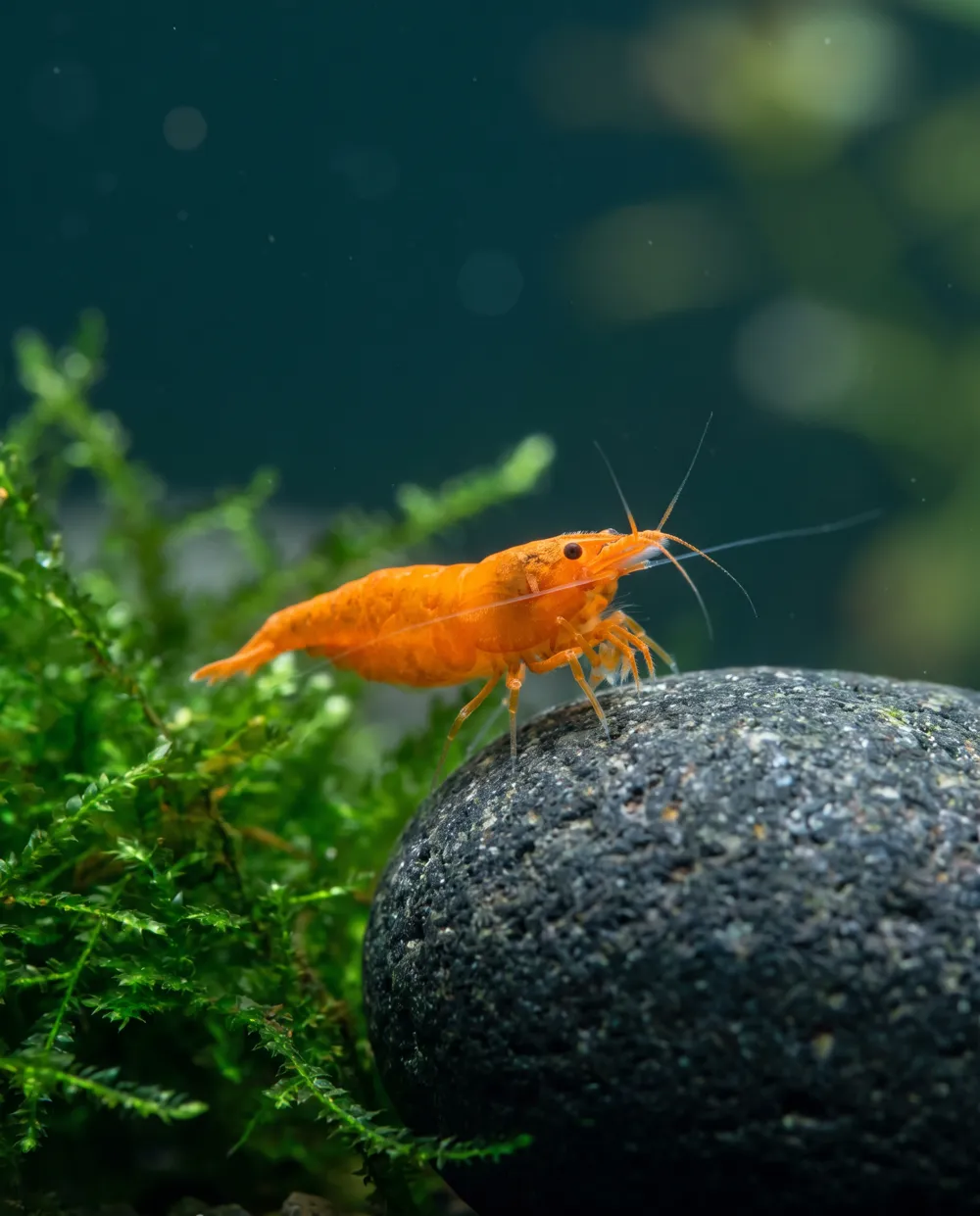
Symbolic image. Real photos of marketplace offers will follow continuously.
Neocaridina davidi var. orange
Garnelenfischer does not sell this species itself
Tangerine orange, opaque and bright. The good mood among the shrimp.
No offer from Garnelenfischer
Garnelenfischer does not breed or sell this variety itself. Find Orange Sakura Shrimp from Swiss breeders on the free marketplace, with the price, quantity and water parameters in the listing.
Search in the marketplacePurchase contract and shipping directly with the respective seller
The Orange Sakura is a strong, warm orange that looks particularly good against a green plant background. It is one of the liveliest Neocaridina and is just as tolerant when it comes to water parameters as the red and yellow lines. In this line, opaque colour only emerges over several generations of targeted selection, as is carried out by good breeders.
The Orange Sakura shrimp does not need any special water. It can handle typical Swiss tap water, which in most regions is between 10 and 25 °dGH. What is more important than the exact value is that it remains stable. A tank of 20 litres or more with a sponge filter, some moss, a root and a few plants is sufficient. Heating is not necessary at room temperature; Below 18 °C the animals become sluggish and reproduce more slowly, but this does not harm them.
They are fed sparingly: a small amount of shrimp food two to three times a week, plus dried leaves (sea almond tree, beech, oak) and alder suppositories. Most of the food is biofilm, which grows on its own in the tank. Too much food is the most common cause of problems, not too little.
For water changes, 10 to 20 per cent weekly is better than half the water monthly. Large changes may trigger a moult, and not all shrimp survive a badly timed moult. Read more in the Water parameters guide.
Neocaridina are suitable for calm small fish such as rasboras and cory catfish as well as snails. Fighting fish, cichlids, larger tetras and anything that has a mouth that can fit a young shrimp 1 cm in size are not suitable. In a well-planted tank, some of the offspring usually survive. If you want a growing colony, keep shrimp without fish. Details in the Association list.
Orange Fire is the even more intensely coloured selection of the Orange Sakura. Both are the same colour of the Neocaridina davidi.
At least ten animals. Statistically, both sexes are present in this group size and the animals show their normal behaviour. For a tank of 40 litres or more, twenty animals make sense. The respective marketplace seller specifies the exact minimum purchase in his listing.
The marketplace seller you order from decides this. The usual packaging is a double water bag with moss to cling to, inside a polystyrene box, with a heat or cool pack depending on the weather. The seller states their policy on shrimp arriving dead in the listing; Garnelenfischer does not sell Orange Sakura Shrimp itself and is not involved in delivery.
Neocaridina davidi var. blue jelly
Light blue and slightly translucent, like a gummy bear with legs.
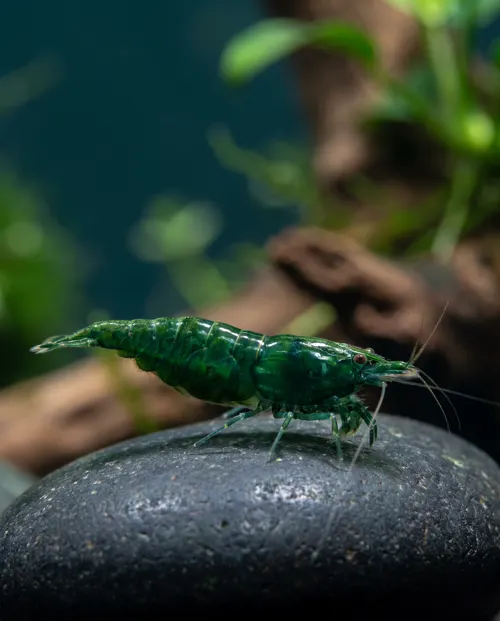
Neocaridina davidi var. green
Jade green, opaque, and the only shrimp that can truly camouflage itself in the moss.
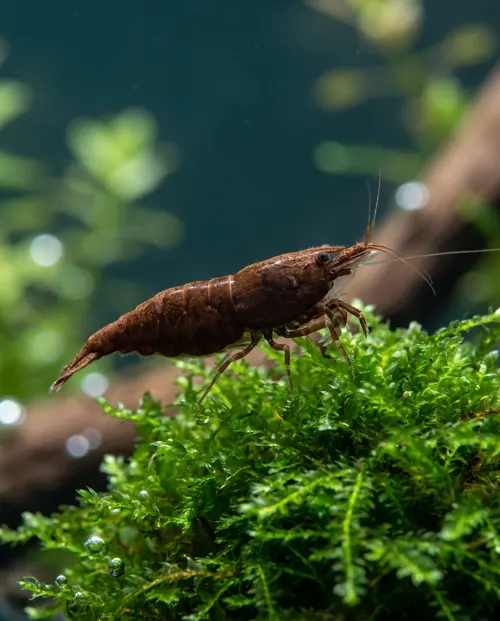
Neocaridina davidi var. chocolate
Dark chocolate with ten legs. Classy, quiet, underrated.